
Jiu Jitsu as Philosophy
Inspired by a quote from Bruce Lee

Philosophy is itself the disease for which it pretends to be the cure: the wise man does not pursue wisdom but lives his life, and therein precisely does his wisdom lie. - Bruce Lee, Striking Thoughts
I’ve been geeking out on Bruce Lee quotes lately after watching Warrior. In this quote he captures the value of martial arts as a physical vector for philosophical practice. I sometimes fall prey to the belief that the mind and body can be separated, that one can think oneself into a different state, can consciously change how they interact with the world.
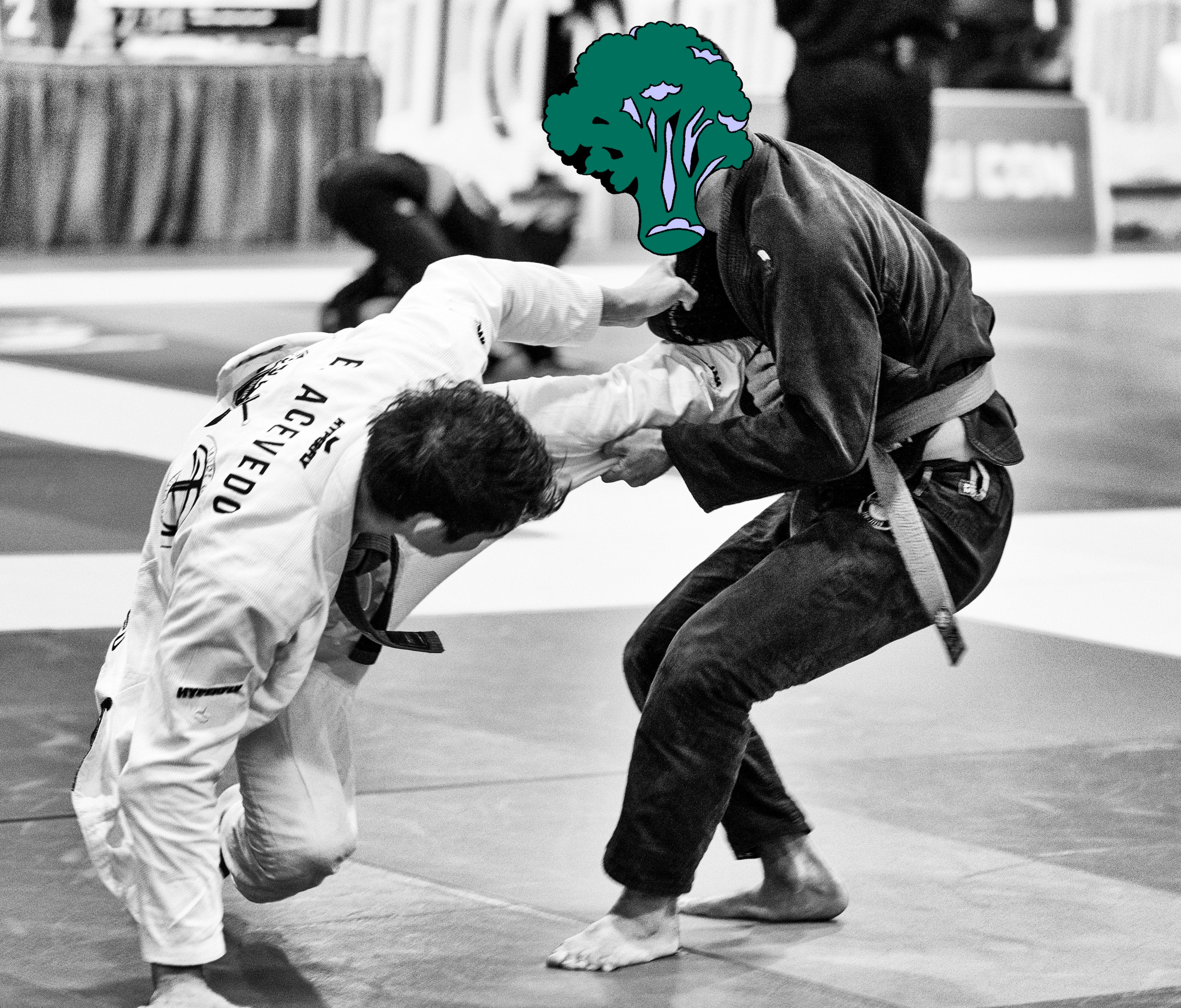
I think the truth is that one takes shape the way a rushing river carves into a sandstone canyon. There exists both the fast day to day flow and the slow, more stable structure that is carved out over time. Our conscious action is the water, and through it we can indirectly carve out the subconscious “wisdom” or “self.” As Bruce Lee’s quote above suggests, to pursue wisdom is to try to directly shape canyon walls with the hands - a futile endeavor. I’m certain his martial arts background, as a forefather of modern mma, led him to this conclusion. Competitive martial arts (and I’m specifically using Jiu Jitsu here as an example) is a fabulous rushing river for sculpting a better existence.
This is something I think all Jiu Jitsu practitioners implicitly feel, although it is rarely directly mentioned. People become addicted, but can’t put their finger on why. Of course there are a plethora of obvious benefits: physical exercise of all types, skill development, camaraderie. But really, the value is having a “Way” of being, a form of practice that is capable of creating change in the subconsciousness.
Daily, prove to yourself that you are not inherently good, by losing. Prove to yourself that you can grow, through practice. That you can be better than the day before. That you can endure pain, that you can become as good as, and then better than, those who you idolized at the start of your journey.
This lesson is repeated over and over, and you never stop taking it. Rather than a flash realization, through Jiu Jitsu this is drilled into you until you have no choice but to believe it. These are -isms that are written about in every self help book. Knowing what the better version of yourself looks like is not complicated - everyone implicitly has an idea of where they want to be. The real magic is in the method of delivery, of taking ideals and ingraining them.
As Kodokan judo was a way to bring old ideals of combat into an industrialized world in the 19th century, Jiu Jitsu does the same in the 21st. Jiu Jitsu retains the raw, primal aspects of combat that forces growth. But it categorizes it in such a way that you can do it every day without destroying yourself. What a vector for development! One on one physical conflict with nobody else to rely on, the prospect of not death but domination lurking in your mind - this creates growth that is more solid, more fundamental than the confidence gained by trying to keep up with fast fashion or social approval.
Fighting is instinct, but it is also something that must be practiced deeply to be understood. Proper practice is bringing the unconscious into the conscious, practicing it, refining it, and then retraining it into the unconsciousness. Practice is having a conversation with the millions of lived experiences of our ancestors that shaped our instinct. Proper practice is stubbornly butting heads with reality over and over, then moulding one’s instinct to better fit what is true. “So, this position requires more weight in the left leg, to maintain mobility. Even if I want to, I can’t be aggressive in this position.” These are epistemic lessons that carve deeply over time.
And of course there is also the competition aspect, the moments of putting it all on the line. Its purpose is both the act itself and to further stress test and iterate on the practice. To continue is the goal.
In short, Jiu Jitsu is (can be) philosophy. And Bruce Lee is based.