
Jiu Jitsu Vignettes #1
Technique Study

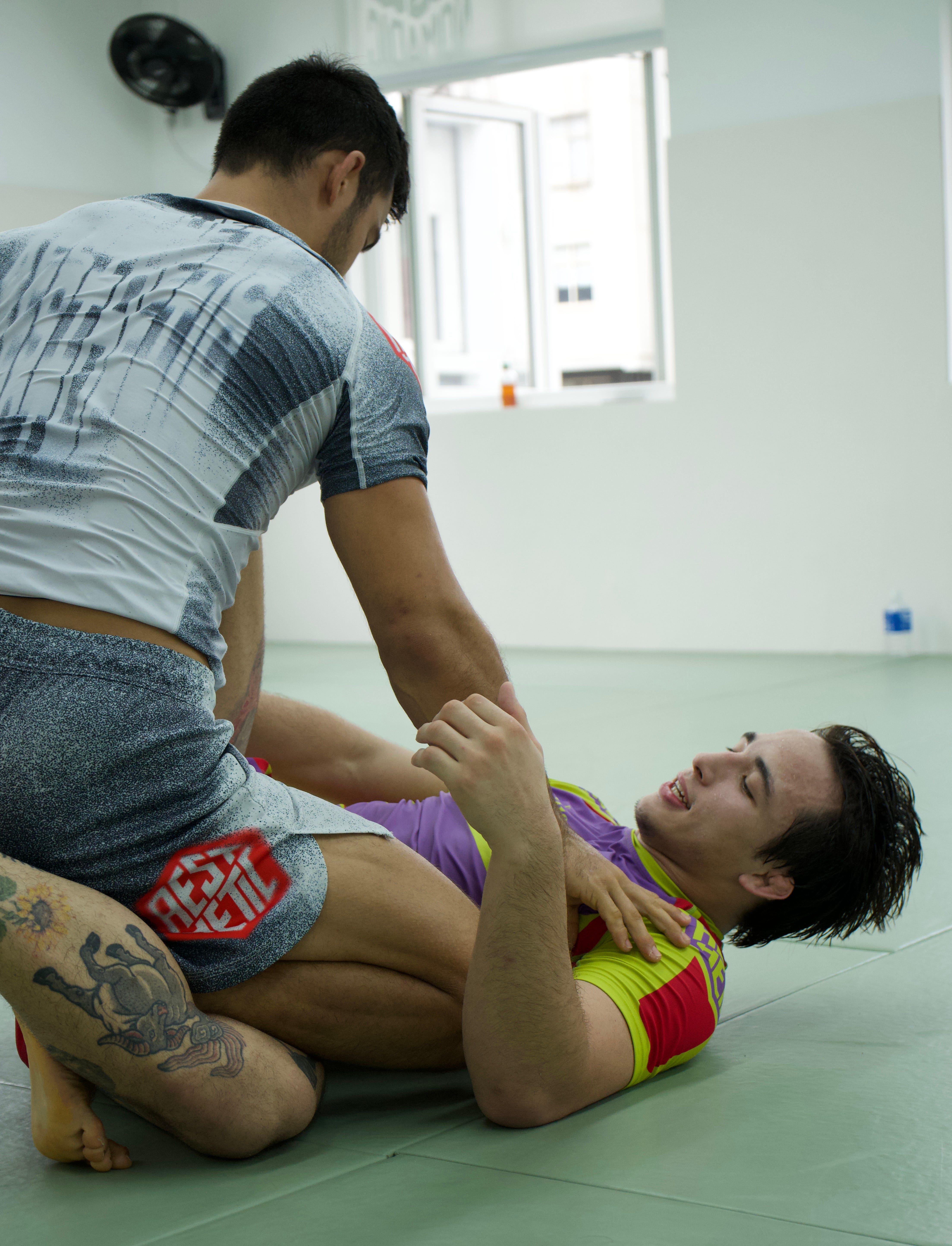
Some technical Jiu Jitsu notes from the last two months.
A bent spine is mobile, a straight spine is strong. I’ve heard this idea expressed in the context of guard retention by my coach and most recently by Jozef Chen when I visited Nomadic Grappling in Shanghai. In guard retention, if your opponent is applying weight and pressure passing you need to have a straight spine and head on the floor in order to transfer weight through frames to the floor. If they are mobile and loose passing, you need to curl the spine in order to spin and reduce the distance required to high pommel and change side to side.
(I highly recommend visiting Nomadic Grappling. My gym makes fun of me for glazing Jozef all the time but he’s really such a technical monster and an autodidact at the highest level. This is who you want to learn from. He’s also very friendly!)
I’ve been applying this principle in guard and also thinking about its inverse; choosing what passing style to engage in based on the opponent’s spinal posture. Switching between pressure and movement based passing forces compensatory reactions from the guard player. It’s one of those games where if the opponent doesn’t know they are playing it, it uses a lot of mental and physical energy to observe and react to subtle changes in passing strategy. This is one that I need to ingrain as a reflexive action via lots of intentional positional training.
The same spine principle applies to takedowns and pins. Use a straight spinal posture when you want to carry or apply weight, use a curved one when you want to be more mobile and reactive. Finishing a double leg or hitting a sprawl demands a straight spine. Hitting an arm drag or defensively hand fighting is better with a slightly bent spine (I’ll admit this can be subtle).
Following up on the previous thought, unknown unknowns are the toughest part of jiu jitsu. In a match they use up the intuitive and sensory energy that is then not available for offensive movement. Being forced to recover from disadvantageous positions, even very subtle ones, means more panic and greater energy expenditure. Knowing the micro-games that are played help the mind and body conserve energy, from grips to spinal positioning. On the offensive side, if you can play games that the opponent isn’t even aware of then you will slowly win the energy battle.
While passing I’ve been thinking about the foot line of the guard; this mainly because there was a period where I kept getting elevated when trying to stuff a leg. I only noticed this once I got my hands on some film of my rolls, which highlighted the importance of film as a training tool to me. When an opponent has foot frames (or hooks with their feet or shins) I think you want to bias your center of mass to be well below an imaginary line drawn between their feet. This prevents the passer from loading their weight on the guard player and getting off-balanced.
Most of the time this means keeping a high head and low hips when the guard player has grips, and leading with the hands and a low head when the guard player doesn’t have grips. Tripod when and only when you are able to use it to pin the hips or shoulders. It is okay for this pin to happen through collapsed frames, but it definitionally can’t happen through real frames (the bone structure of the arms/legs pointing at you).
I’ve also been paying more attention to my relative foot and knee position when passing. If the guard player is trying to move around to the back (say via a berimbolo in de la riva) the leading passing foot should be directly under the knee to stuff their guard. If the guard player is trying to elevate and get their center of mass underneath, the leading foot should be well behind the knee, with the knee pointing at the guard player. This brings weight back below the guard players foot line, making front and back off balances more difficult.
Switching gears to old school jiu jitsu, a crossface may more aptly be described as a cross neck. Starting low on the neck, frame up and into the jaw, focusing equally on the lifting and rotating aspects. This applies choking pressure to the carotid artery, and separating the head from the rest of the body makes them weak. Previously I was struggling with the bottom player claiming the inside space off a crossface (taking the underhook basically) and using that to scoop the leg or rotate inward. Separating the head from the body fixes this.
When playing both de la riva and reverse de la riva, if you’re moving around the body into a bolo/baby bolo/kiss of the dragon type of attack, you want to be inverted up on a shoulder as soon as possible, ideally before your upper body is in gripping range. This is a much more mobile position and is more defensively sound against weight and gripping, as your spine is now aligned with your opponent’s direction of force. Guard should rarely be played with the back flat on the ground.
Wrist to wrist under the scapula or just wrists/forearms under the body in general are the strongest pins in half guard / side control because of the reinforced wedging force.
I’m finally starting to understand how to place my hips when doing judo type throws. It really feels counterintuitive, but bringing the upper body and hips in and close to the opponent is what creates a strong connection for turning throws and foot sweeps.
And as always, remembering to keep knees to chest in guard, always off balance the opponent, present dilemmas, be light on the toes when standing, and relax.
The way I've been thinking about judo recently is "disconnect your opponent from the floor". People feel "strong" or "heavy" when they can brace or wedge against the ground; reducing or interrupting this connection makes a person light and movable.
Also, 90% of the opponent's resistance comes from two legs touching the ground. One leg is no legs, imo.